
Knowledge.
Ultraviolet (UV) Water Purification Systems
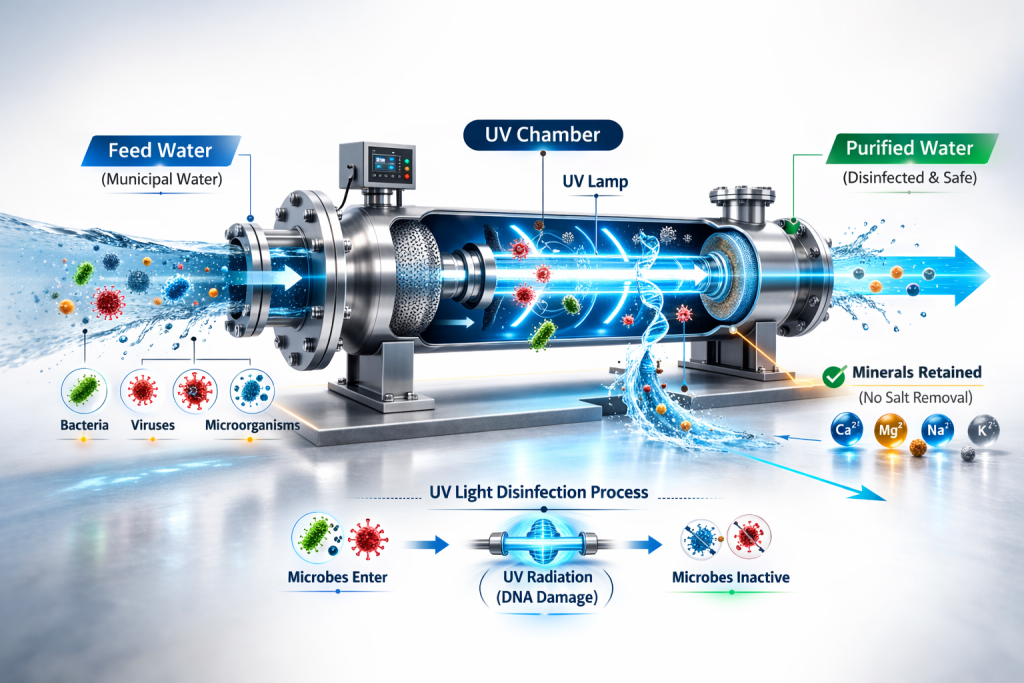
Ultraviolet (UV) water purification systems use ultraviolet light to kill or deactivate bacteria, viruses, and other microorganisms by passing water through a UV chamber where the light damages the DNA of microbes, rendering them inactive and unable to reproduce. However, UV systems do not remove dissolved salts, chemicals, or heavy metals from water. They are best suited for municipal water supplies with low TDS and are commonly used in schools, offices, residential apartments, and restaurants where water is already clear and within safe mineral limits, and the primary concern is biological contamination. UV systems have a lower initial investment compared to RO, operate at a low cost, require periodic lamp replacement, and do not alter the taste or mineral content of water, making them an economical solution for disinfection-only applications.
Ultrafiltration (UF) Systems
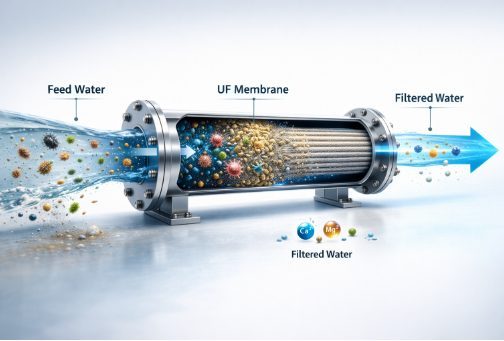
Ultrafiltration (UF) is a water purification technology that uses a hollow fiber membrane to physically filter out suspended solids, bacteria, some viruses, and turbidity from water. Unlike Reverse Osmosis (RO), UF does not remove dissolved salts or minerals, making it suitable where TDS levels are already acceptable. UF systems operate at lower pressure than RO, produce no reject water, and allow natural minerals to remain in the treated water. They are ideal for pre-treatment before RO systems, surface water treatment, institutions, and areas with low TDS but high turbidity. UF is especially effective when the goal is to retain natural minerals while removing sediments and microbial contamination. In terms of cost, UF systems have a moderate initial investment, require low energy to operate, produce minimal water wastage, and need periodic membrane cleaning to maintain performance.